
In this piece I focus on Ubuntu and its parent company, Canonical, because their story neatly illustrates the tension between community expectations and corporate realities. I’ll lay out the CentOS precedent, examine Canonical’s finances and possible futures, run through alternative governance options, and close with a short look at India’s adoption of Ubuntu-based systems.
Why operating-system level projects are especially sensitive
Unlike a single library or application, an operating system distribution occupies the foundational layer for countless services, devices, and enterprises. Decisions taken at the OS level cascade into infrastructure, security, and long-term compatibility. That makes corporate stewardship of such projects both powerful and consequential.
Benefits and risks of corporate stewardship
On the positive side, companies can bring sustained funding, dedicated engineering teams, and enterprise support contracts that make long-term maintenance feasible. A profitable steward can underwrite security audits, paid support, and long-term release schedules.
On the other side, corporate priorities sometimes shift product roadmaps, introduce vendor-specific packaging or integration choices, and — in extreme cases — reallocate community-facing projects toward proprietary revenue-generating models. The CentOS episode is an instructive example.
The Red Hat → IBM → CentOS saga and its lessons
When Red Hat’s stewardship changed direction for CentOS, many downstream users reacted strongly. What began as a change in release policy became, for many, a loss of trust — and a migration trigger.
As of early 2026, the long-predicted migration away from CentOS is clearly visible in the data. The traditional CentOS Linux 7 reached its end-of-life in June 2024. While CentOS Stream continues to see active development—recently adding RISC-V architecture support and an official mascot—its market share for web servers has dwindled to just 1.5%, a steep drop from its peak. The lesson from this saga is painfully clear: decisions at the company level can upend ecosystems that assumed continuity.
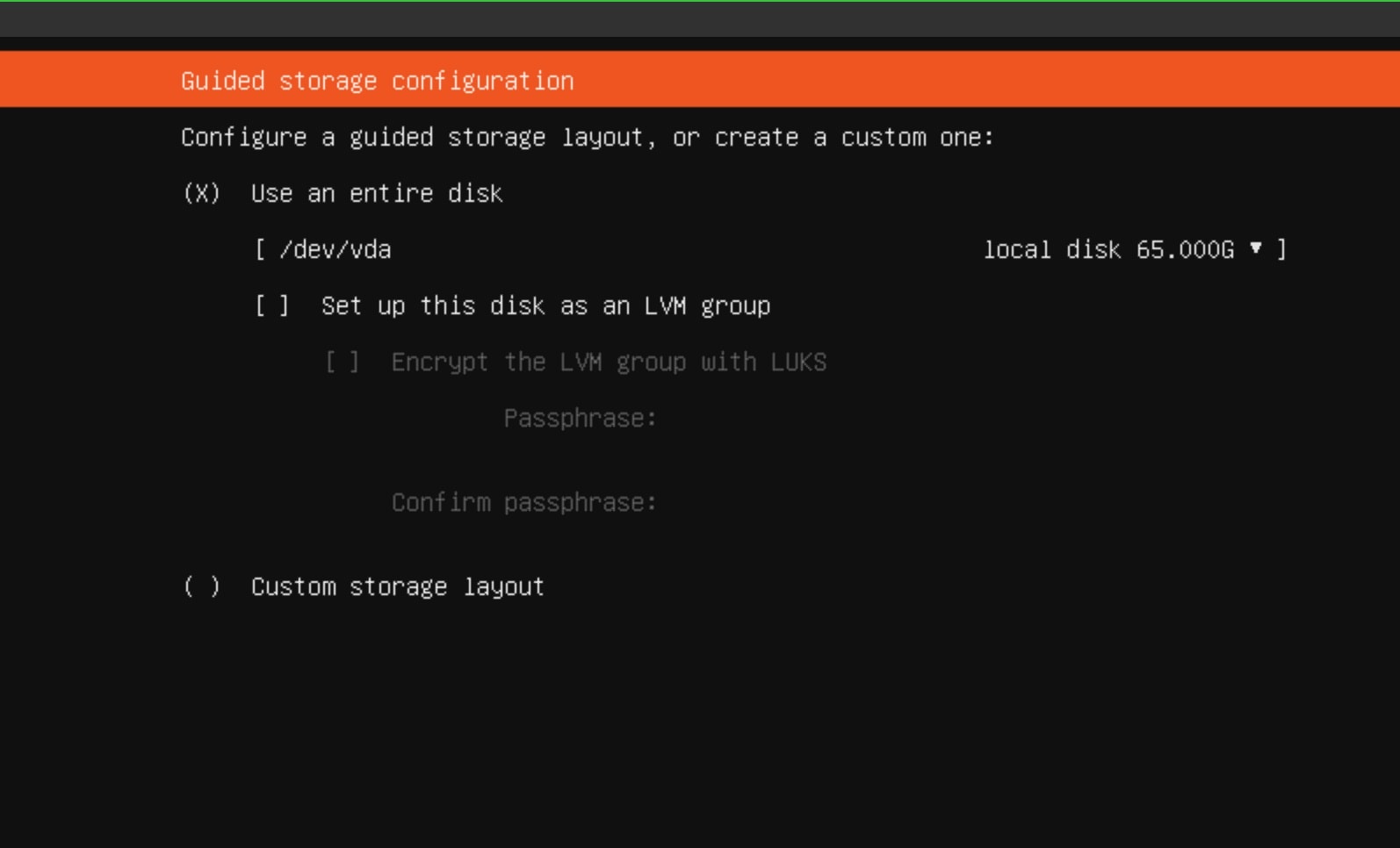 Installation of Ubuntu 20.04 on a VPS with encryption, emphasizing security best practices.
Canonical and Ubuntu — history, business reality and why this matters
Ubuntu’s promise has always been accessibility: a friendly, widely adopted Linux that lowers the barrier for developers, admins, and organisations. Canonical — founded and long-led by Mark Shuttleworth — pursued a mixed model: open-source software with paid support, cloud integrations, and partnerships.
Financially, Canonical moved from years of limited profitability to reporting revenues in the hundreds of millions and modest net profits. Those numbers make the company stable, but they also make Canonical an attractive strategic asset for larger firms with a cloud, hardware, or developer-tools focus. That intersection of stability and attractiveness is important: it creates optionality, including the possibility of acquisition.
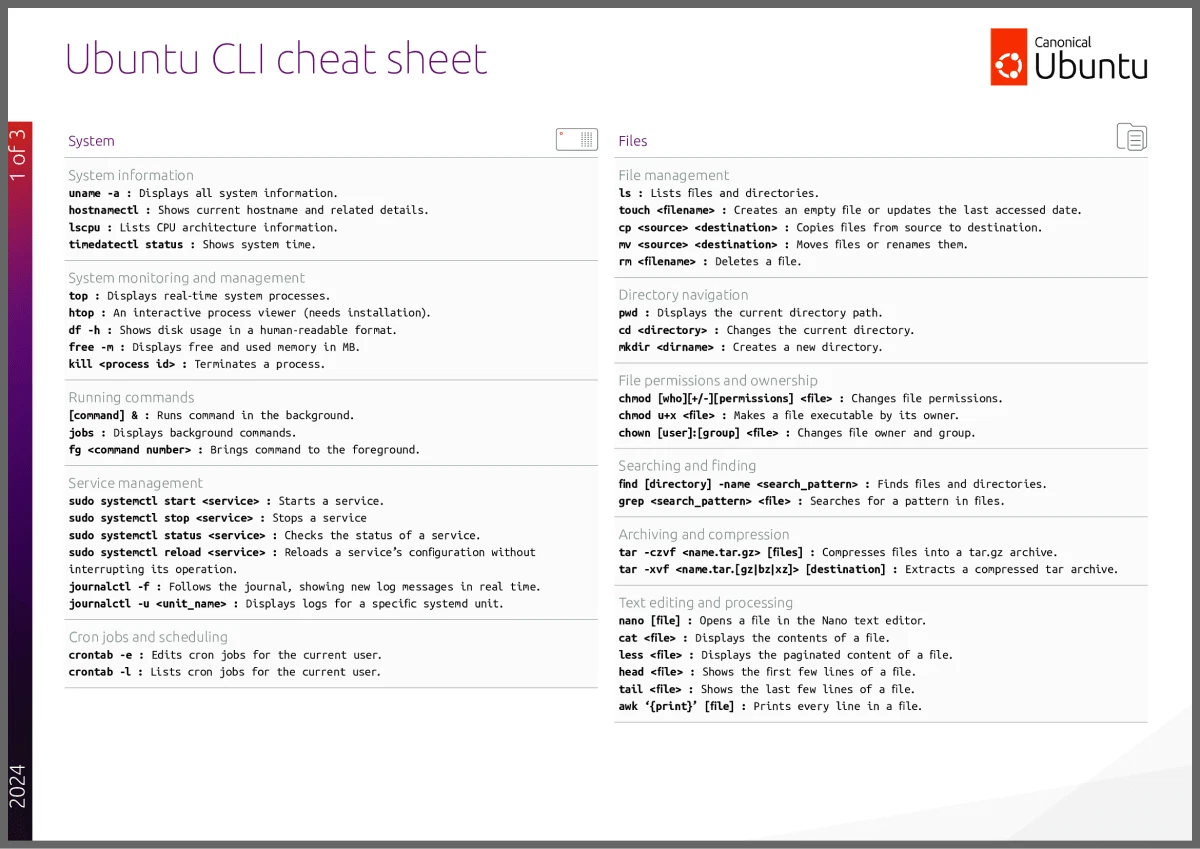 A cheatsheet for Ubuntu commands, useful for quick reference and learning.
Valuation approaches (brief)
Valuation can be viewed through multiple lenses — revenue multiples, discounted cash-flows, or strategic premiums paid by an acquirer. Each method yields a different perspective: revenue multiples capture market appetite for platform businesses; DCF reflects long-term cash generation; strategic premiums capture synergies a buyer might get. I summarise numbers and methods in the annexure tables at the end.
Who might buy Canonical — and why (short list)
Potential buyers range from cloud hyperscalers (AWS, Google) to hardware vendors (Dell, HPE), to larger software conglomerates (Broadcom-style buyers) or private equity. Each buyer brings different incentives: cloud vendors might want deeper optimisation and differentiation; hardware vendors could prefer bundled stacks; PE could focus on margin extraction.
Regulatory risk and community backlash are genuine concerns, and the landscape is getting more complex. With the European Union’s Cyber Resilience Act (CRA) now in force, owning a foundational open-source project comes with new legal responsibilities regarding software supply chain security. Compliance deadlines for reporting begin in September 2026, meaning any acquirer would need to factor these new compliance costs and obligations into their plans. If a buyer already dominates complementary markets, an acquisition could attract even more antitrust scrutiny in this new regulatory environment.
 Ubuntu AI generated image using Nano Banana Pi
Alternative governance: the non-profit / foundation model
Transferring IP to a non-profit foundation — a route taken by some projects — can protect a project from unilateral corporate direction. Foundations can codify governance and provide a neutral home for contributors. But foundations also face fundraising and governance complexities: who seats the board, how are conflicts resolved, and where does long-term financing come from?
There is no perfect template. Mozilla and Apache show the foundation model can work, but they also show it needs a resilient funding strategy and mature governance to scale. Canonical’s stakeholders would need to weigh those trade-offs carefully.
Where Ubuntu diverges from Linux conventions
Ubuntu remains open source, but Canonical has introduced layers that create differentiation—and potential intellectual property—beyond standard Linux distributions. Three examples illustrate the pattern.
1. The Snap Store: A proprietary distribution layer
While snapd is open source, the Snap Store is a proprietary service controlled entirely by Canonical. Applications run in confined sandboxes defined by Canonical’s rules, distributed through Canonical’s infrastructure. Enterprise customers can pay for private, dedicated Snap Stores. This creates a proprietary distribution channel sitting atop open-source tools—a layer Canonical controls completely.
2. OEM kernel variants: Hardware dependencies
Ubuntu maintains OEM kernel variants—optimized derivatives for hardware partners. These are not upstream contributions but custom-tuned kernels with patches for specific hardware, configurations optimized for pre-installed systems, and lifecycles tied to OEM product cycles. Hardware vendors must maintain relationships with Canonical’s kernel team rather than relying solely on upstream communities.
3. Ubuntu Pro: Monetizing security maintenance
Ubuntu Pro monetizes security maintenance itself. ESM (Extended Security Maintenance) backports security patches exclusively for paying subscribers. Over 36,000 community packages receive updates only through Ubuntu Pro. FIPS-certified modules required for government compliance are available only with a subscription. The code is open; the certified builds are Canonical-controlled.
The valuation angle: What this means for an acquisition
The pattern across these examples is consistent: control the distribution channel, monetize the maintenance layer, create dependencies through optimization, and lock in enterprise compliance. The actual open-source code remains GPL. But the services, certifications, management tools, and distribution channels are proprietary. This is precisely the business model that made Red Hat valuable—IBM paid $34 billion not for code but for the support contracts, certifications, and enterprise trust built around that code.
Recent announcements reinforce this direction. Canonical increasingly positions itself as the “trusted foundation for your device lifecycle”—emphasizing long-term support contracts, compliance with regulations like the EU Cyber Resilience Act, and managed updates. All services, not just code.
The trajectory is clear: Canonical is building proprietary layers around open-source foundations, creating exactly the kind of defensible revenue streams that justify a multi-billion dollar acquisition premium. For a potential acquirer, that dependency translates to recurring revenue, customer lock-in, and regulatory moats. The open-source code remains free. The services around it are where value concentrates—and that concentration drives acquisition valuations.
Conclusion — risk, opportunity and the community’s role
The central theme is simple: corporate ownership of foundational open-source projects is both a risk and an opportunity. Corporate resources can stabilise and professionalise projects, but they can also change incentives in ways that frustrate users and contributors. Ubuntu sits at that crossroads: profitable enough to attract buyers, revered enough to need careful transition plans if governance changes.
Whether Canonical pursues IPO, sale, strategic partnerships, or a foundation route, the community should not be an afterthought. Conversations about stewardship, governance, and funding must include the people who rely on these systems daily.
 AI generated image using Seedream
Annexure A — Table 1: Valuation methods & approximate Canonical value
Table 1: Valuation sketches and ranges (illustrative figures).
| Valuation method | Key assumptions | Approximate value (USD) |
|---|---|---|
| Revenue multiple (conservative) | Revenue ≈ $292M. Multiple = 5× | $1.45B |
| Revenue multiple (market / strategic) | Revenue ≈ $292M. Multiple = 8–10× | $2.34B – $2.92B |
| EBIT / Net-profit multiple | Net profit ≈ $14–15M. Multiple 15–20× | $225M – $300M (profit-based, understates strategic value) |
| Illustrative DCF | Growth 10–15% near term, terminal 2.5%, WACC ≈ 10% | $2.0B – $3.5B |
| Strategic premium | Acquirer pays +25–50% for synergies | $2.5B – $4.5B (top-end scenarios) |
Notes: Revenue and profit figures are illustrative and based on pre-2026 estimates. Actual 2026 financials for Canonical are not publicly confirmed in the provided files. Multiples and DCF inputs are sensitive to market conditions and growth assumptions; these are indicative ranges for discussion.
Annexure B — Table 2: Potential acquirers — pros & cons
Table 2: Strategic rationale and community/regulatory risks.
| Potential acquirer | Why they might buy | Pros (for buyer) | Cons / regulatory & community risk |
|---|---|---|---|
| IBM | Consolidate enterprise Linux offerings | Cross-sell subscriptions; enterprise integration | High antitrust risk; community backlash (CentOS precedent) |
| AWS (Amazon) | Control cloud-optimised Linux images | Better cloud optimisation; differentiate services | Cloud neutrality concerns; developer trust issues |
| Infra & developer ecosystem alignment | Integrate with tooling, AI infra | Strategic fit unclear; potential community scepticism | |
| Dell / HPE | Hardware+software stack advantages | OEM bundling; enterprise offers | Lower M&A scale; cultural mismatch potential |
| Broadcom / VMware | Acquisition-first strategy | Rapid consolidation | Community distrust given past behaviour |
| Private Equity | Buy-and-build; monetise services | Margin improvements; scalable service models | Short-termism; erosion of community goodwill |
| Remain independent / Foundation / IPO | Founder/market-driven route | Independence; preserved community trust (foundation) | IPO pressure; foundation needs sustainable funding |
Frequently Asked Questions
Why did the CentOS decision cause such an uproar? The CentOS policy change altered expectations about long-term binary compatibility and support timelines. Many users had standardised on CentOS precisely because it promised long-term stability; changing that without adequate community buy-in felt like a unilateral shift in the project’s contract with its users. The subsequent migration away from CentOS, now clearly visible in usage statistics, validated those concerns.
Is Ubuntu really “bloated” compared to Debian or Alpine? Operationally, Ubuntu full images and some server defaults can occupy more disk space than minimal Debian or Alpine installs. The trade-off is convenience, driver support, and broader package availability. For many users, the operational cost is outweighed by ecosystem benefits; for minimal or constrained environments, alternatives like Alpine remain better choices.
Would a foundation solve trust issues? It could help by institutionalising governance and preventing single-entity control. But foundations need predictable funding and clear governance frameworks; otherwise, they risk being under-resourced and slow to act. The growing complexity of regulations like the EU CRA also means a foundation would need significant resources to ensure compliance for its entire downstream community.
 AI generated image using chatGPT