AI seems to have found its way into almost every part of the creative process, and audio editing is no exception. From one-click noise removal and automatic transcription to text-based editing and AI-generated voices, today's tools promise faster workflows than ever before.But does that mean a traditional, open-source audio editor is no longer relevant?
Let us explore whether Audacity, an open-source audio editor first released in 2000, still deserves a place in an audio creator's toolkit in an era where AI appears to be doing almost everything—including audio editing. Having used Audacity across Linux since 2016, on macOS between 2017 and 2022, and even experimentally on a Raspberry Pi 3B, my answer is a definite yes. The reasons, however, are quite different from when I first started using it.
सारांश (हिन्दी)
पिछले कुछ वर्षों में AI ने ऑडियो एडिटिंग को पहले से कहीं अधिक तेज़ और आसान बना दिया है। ट्रांसक्रिप्शन, नॉइज़ रिडक्शन और शुरुआती एडिटिंग जैसे कई काम अब कुछ ही मिनटों में पूरे हो जाते हैं। इसके बावजूद, जब मुझे ऑडियो पर पूरी तरह नियंत्रण चाहिए—जैसे वेवफॉर्म स्तर पर एडिटिंग, सटीक फ़ेड या छोटे-छोटे सुधार—तो मैं आज भी Audacity का उपयोग करता हूँ। वर्ष 2000 में शुरू हुआ Audacity प्रोजेक्ट आज भी लगातार विकसित हो रहा है। OpenVINO आधारित AI प्लग-इन्स, Audio.com जैसी सुविधाएँ और इसका मुक्त स्रोत (Open Source) स्वरूप इसे 2026 में भी एक प्रासंगिक और भरोसेमंद ऑडियो एडिटर बनाते हैं।
सारांश (मराठी)
गेल्या काही वर्षांत AI मुळे ऑडिओ एडिटिंग अधिक जलद आणि सोपे झाले आहे. ट्रान्सक्रिप्शन, नॉइज रिडक्शन आणि प्राथमिक एडिटिंग काही मिनिटांत पूर्ण होते. तरीही वेव्हफॉर्म पातळीवरील अचूक संपादन, फेड्स आणि सूक्ष्म बदलांसाठी मी आजही Audacity वरच विश्वास ठेवतो. सन २००० मध्ये सुरू झालेला Audacity हा मुक्त स्रोत (Open Source) प्रकल्प आजही सातत्याने विकसित होत आहे. OpenVINO आधारित AI प्लग-इन्स, Audio.com चे एकत्रीकरण आणि विविध प्लॅटफॉर्मवरील उपलब्धता यामुळे २०२६ मध्येही तो एक विश्वासार्ह ऑडिओ एडिटर म्हणून टिकून आहे.
Why I Still Reach for Audacity
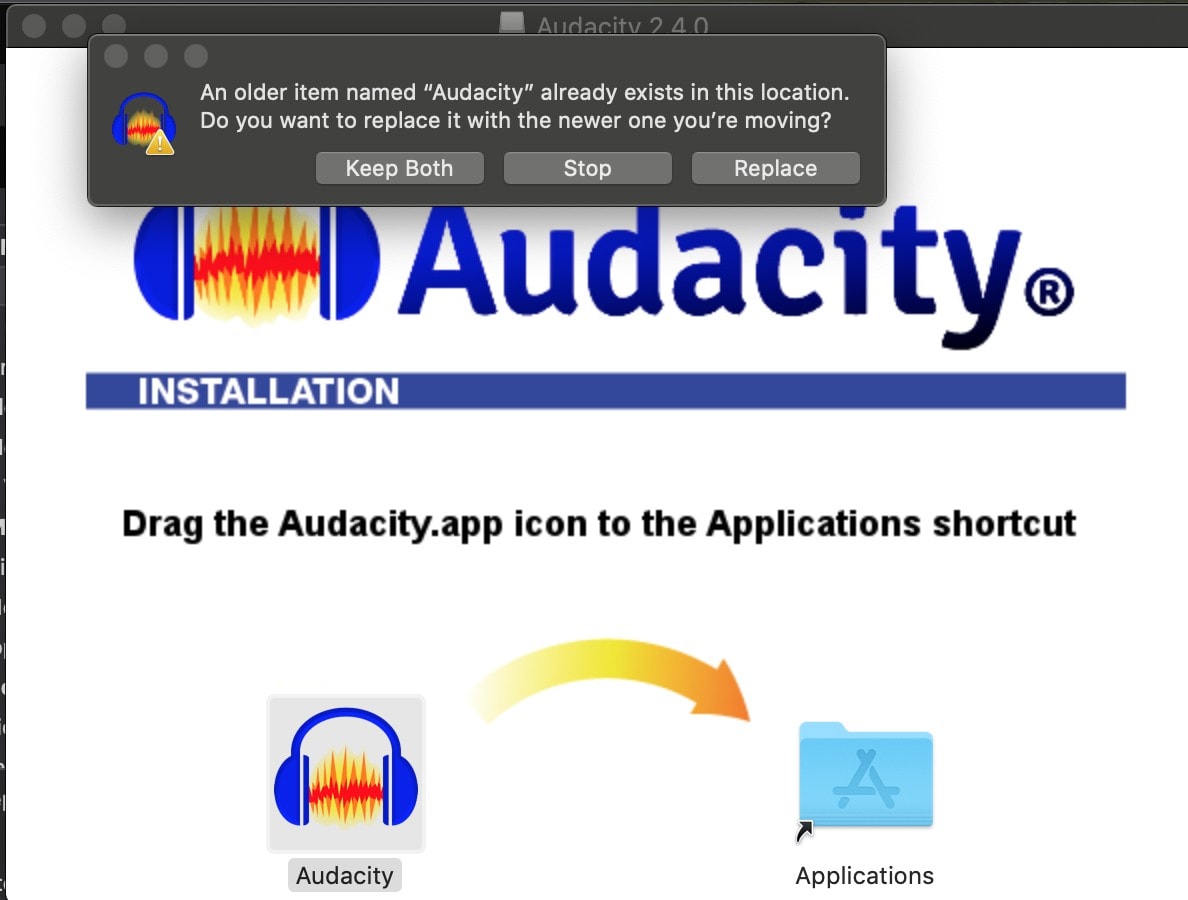
Audacity remained one of the few applications that stayed with me throughout my podcasting journey.
When I migrated to Linux in 2016, finding a capable, free and open-source audio editor was high on my priority list. Audacity quickly became part of my regular toolkit, and that hasn't changed since. Whether I was running Debian, Ubuntu or Fedora, it always felt familiar and dependable.Between 2017 and 2022, I also edited dozens of podcast episodes on macOS. Again, Audacity quietly did its job without demanding subscriptions, cloud accounts or expensive hardware. The interface may not have been flashy, but it was predictable—and that's something I value when working against deadlines.
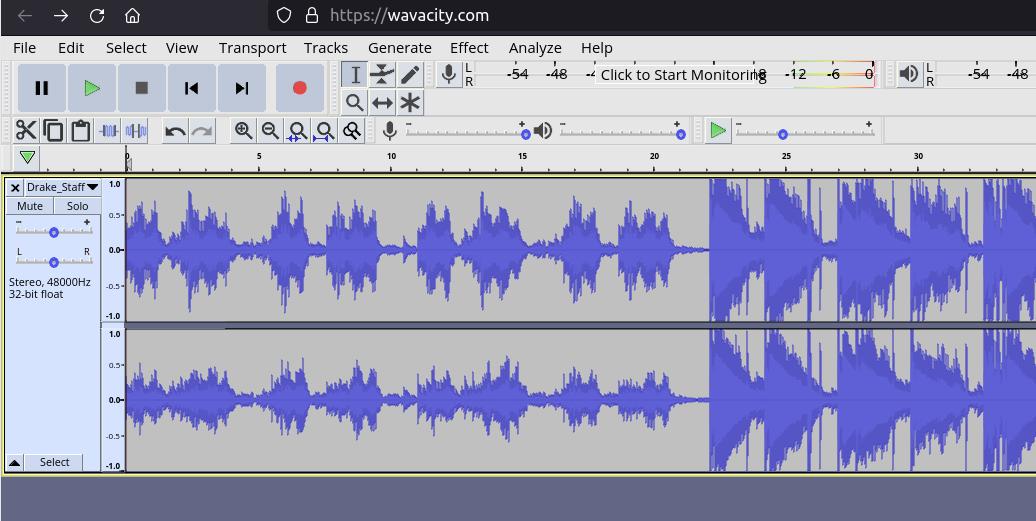
One of my more memorable experiments was running Audacity on a Raspberry Pi 3B. Surprisingly, it worked. Recording, trimming and basic editing were perfectly possible, although larger projects certainly tested the hardware. I wouldn't recommend it unless you enjoy experimenting, but it demonstrated just how lightweight and efficient Audacity really is. I've also occasionally used the browser-based version, Wavacity, when I needed to make quick edits on a machine where installing software wasn't practical. While I still prefer the desktop application, it is another example of how the Audacity ecosystem has quietly expanded over the years.
AI Has Changed Audio Editing—Not Replaced It
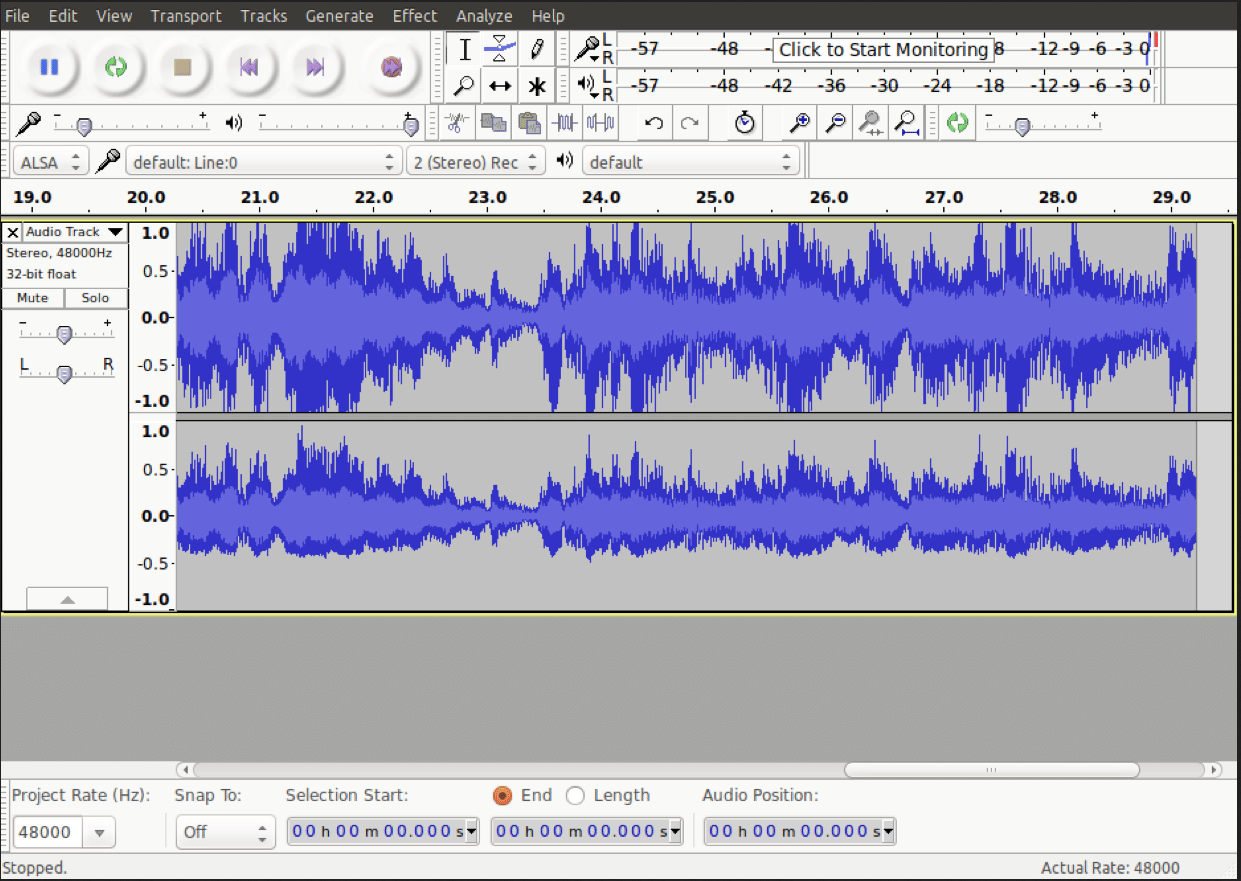
AI has accelerated my workflow, but precision editing still happens inside Audacity.
There is no denying that AI has transformed podcast production. Today I routinely use AI-powered tools for transcription, removing background noise, generating show notes, improving voice clarity and creating rough edits. Work that once consumed hours can now be completed in minutes. Some of the services I've used over the years include Remaster Media, Suno AI, Play.ht and LOVO, alongside other AI-assisted audio tools. They have become an integral part of my production workflow, particularly for repetitive tasks that benefit from automation. However, AI isn't perfect.
Sometimes noise reduction becomes overly aggressive and removes the natural warmth from a voice. Sometimes transitions between speech and background music don't sound quite right. On other occasions, I simply want to remove a tiny click, adjust a fade by a fraction of a second or line up a music cue exactly where I want it. That's where Audacity continues to excel. Rather than replacing AI, Audacity complements it. AI gives me speed; Audacity gives me control. One handles the heavy lifting, while the other lets me make the final creative decisions.
After almost ten years of podcasting, I've realised that the best workflow isn't choosing between AI and traditional editing. It's combining both.
Audacity Has Quietly Evolved Too
Audacity today is much more than the desktop application many of us first discovered years ago.
One misconception I often hear is that Audacity hasn't changed much. In reality, it has evolved steadily while staying true to its open-source roots.Recent versions support modern workflows far better than many people realise. Through Intel's OpenVINO plugin suite, Audacity now offers local AI features such as noise suppression, music separation and Whisper-based transcription. Running these features locally rather than relying entirely on cloud services is an attractive option for creators who value privacy or simply prefer working offline.
Another interesting addition is its integration with audio.com. While I don't use it every day, having the option to back up recordings, move projects between systems or share audio through an integrated cloud service shows that the project is adapting to how creators work today. The result is a mature editor that combines decades of refinement with carefully chosen modern features instead of chasing every new trend.
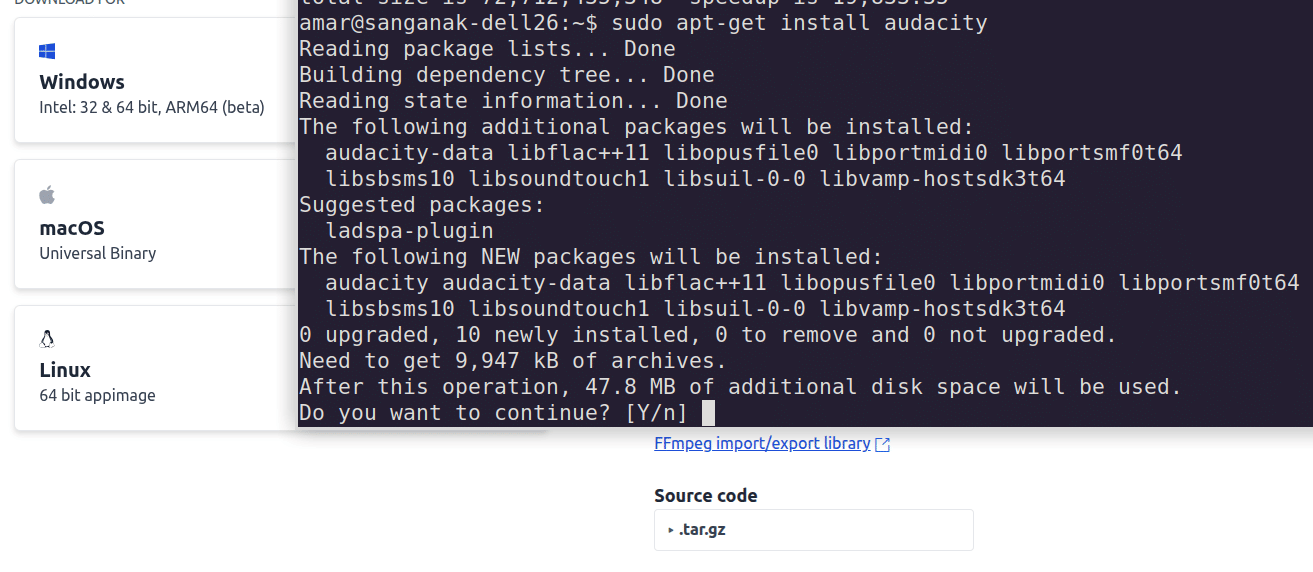 Installing Audacity on Linux
Why Audacity Still Belongs in My Toolkit

Twenty-six years on, Audacity continues to prove that good open-source software never really goes out of style.
My workflow today is very different from what it was even five years ago. AI performs the first pass—transcription, rough edits, basic clean-up and sometimes even content generation. Once that is done, I open Audacity for the detailed work: refining transitions, fixing timing, adjusting levels and making the small edits that ultimately improve the listening experience.
It is no longer a case of AI versus Audacity. It is AI and Audacity.
That combination gives me the best balance of speed and precision. AI has undoubtedly transformed audio production, and I wouldn't want to give up the productivity gains it brings. But I've also learned that speed and precision aren't always the same thing. Whenever I need complete control over an edit, Audacity is still the application I instinctively open.
More importantly, Audacity hasn't stood still. It has embraced modern capabilities such as local AI plugins and cloud integration through Audio.com while remaining true to its open-source roots. That balance between innovation and reliability is precisely why it continues to earn a place in my audio toolkit.
Looks like the 26-year-old Audacity project still has a long runway ahead of it.
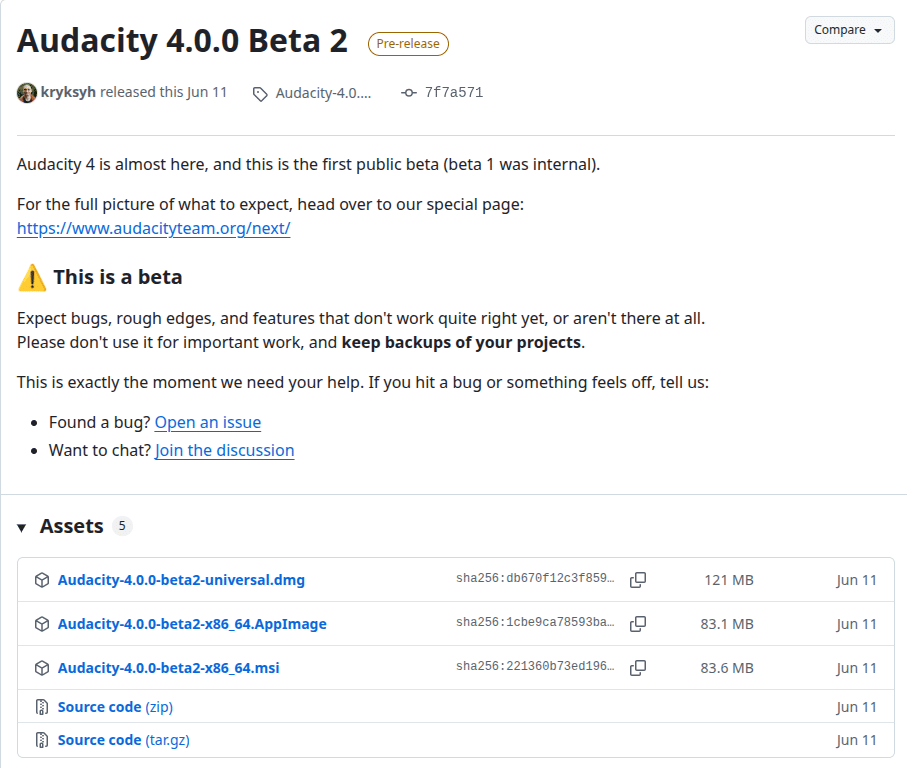 audacity 4.0 beta, august 2026
References
- Audacity Official Website
- Audio.com
- Intel OpenVINO Plugins for Audacity
- Ten Years of Podcasting
- Audacity's YouTube Channel
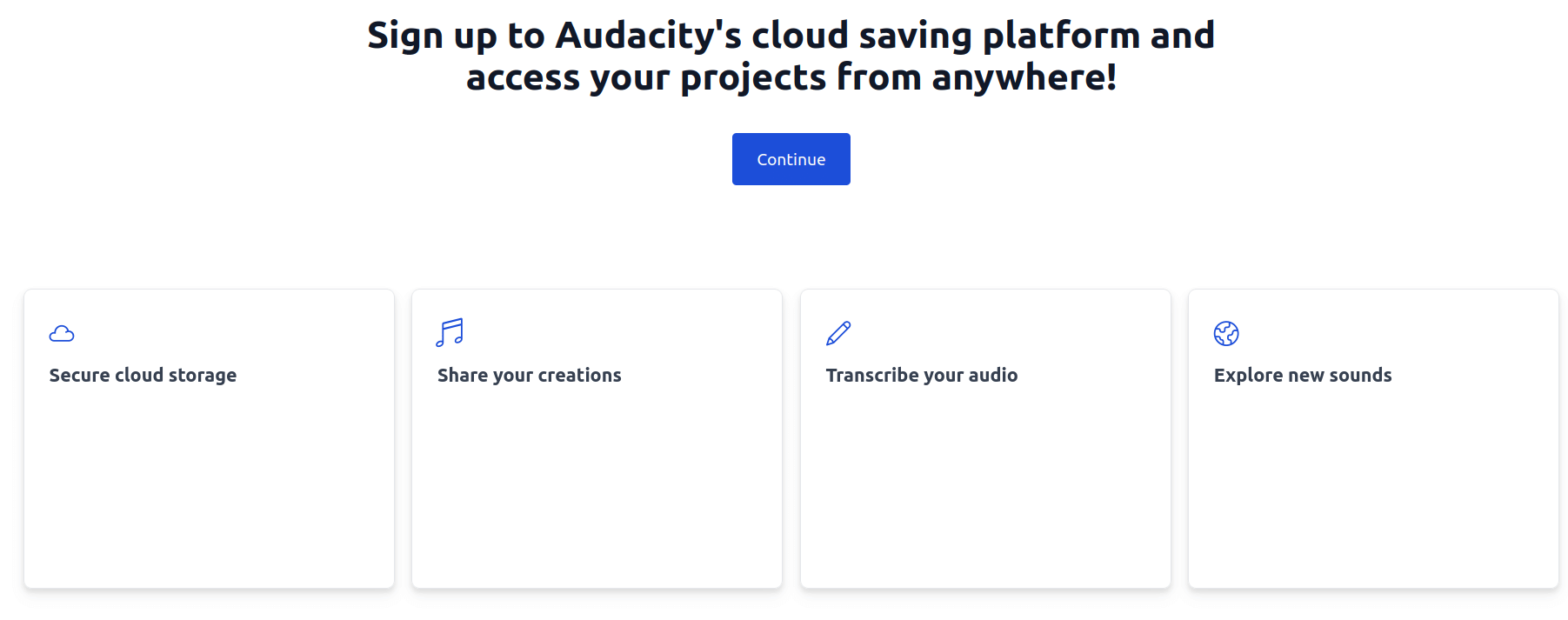 AudacityCloud