This post takes a deep dive into notable Indian Linux distros—active, inactive, and forgotten—and what their journeys reveal about open-source adoption in India. Find my take on some of the distributions I tested personally in 2017-19 era.
Originally published on March 15, 2018. Last updated July 16, 2026.
Update July 2026 : MayaOS
Maya OS: A Government Ubuntu-Based Distribution on the Horizon
In a more recent development, the Indian government has been working on Maya OS — an Ubuntu-based operating system developed jointly by DRDO, C-DAC, and NIC. Launched for defence ministry systems in August 2023, Maya replaces Windows on internet-connected government computers and ships with an endpoint security system called Chakravyuh. The UI is designed to mimic Windows to ease the transition for government staff.
Pros of using Ubuntu as a base: Ubuntu provides a mature, well-maintained foundation with strong security practices, a vast package repository, and LTS releases that guarantee years of support — ideal for an organization that needs stability without reinventing the wheel.
Cons of using Ubuntu as a base: Building on Ubuntu means inheriting Canonical's release cycle and architectural decisions, and the "indigenous" label becomes harder to justify when the core system is fundamentally a repackaged foreign distribution.
Introduction
India has a growing footprint in the Linux world. A search on DistroWatch for India-origin distributions returns a handful of active projects — some government-backed, some community-driven, and some experimental. This post is a hands-on look at three of them, based on testing I carried out through 2017 in VirtualBox.
Summaries
English Summary:
This post reviews Linux distributions originating from India, with a focus on Hamara Linux and AryaLinux — both tested in VirtualBox during 2017. It also covers BOSS Linux, the government-backed distribution from C-DAC. The article explores why so many Indian distributions are based on Ubuntu or Debian, and raises a broader question: does a "country of origin" label matter when the underlying code is written by a global open source community?
Hindi Summary:
यह लेख भारत में विकसित होने वाले लिनक्स वितरणों की समीक्षा करता है, विशेष रूप से हमारा लिनक्स और आर्यालिनक्स पर, जिनका परीक्षण 2017 में किया गया था। यह बीओएसएस लिनक्स पर भी चर्चा करता है और यह सवाल उठाता है कि क्या खुले स्रोत कोड के वैश्विक समुदाय द्वारा लिखे गए कोड में "देश" का महत्व है?
The Indian Linux Distribution Landscape
A DistroWatch search filtered by origin "India" and status "Active" returns a short but interesting list. The notable entries include:
- BOSS Linux (Bharat Operating System Solutions) — developed by C-DAC, Chennai. Debian-based, government-funded, with support for 18+ Indian languages.
- Hamara Linux — community-driven, Debian-based, focused on Indian language support and accessibility.
- AryaLinux — built on Arch Linux and LFS (Linux From Scratch), taking a minimalist, build-it-yourself approach.
A few others appear and disappear from DistroWatch over the years, but these three have had the most sustained presence.
Why Ubuntu? The Base Distribution Question
One pattern stands out immediately when browsing India-origin distributions on DistroWatch: a significant number are based on Ubuntu or Debian. Why?
- Localization support. Ubuntu and Debian ship with mature internationalization frameworks. For distributions targeting Indian languages — Hindi, Tamil, Bengali, Marathi, and others — this is a critical advantage. Building i18n from scratch on a less-supported base would be a massive effort.
- Ease of forking. Tools like Cubic, Remastersys, and Ubuntu's own customization documentation make it relatively straightforward to create a custom ISO with pre-installed packages, themes, and language packs.
- Hardware compatibility. India has an incredibly diverse hardware ecosystem — from low-cost laptops to assembled desktops. Ubuntu's hardware detection and driver support reduce the burden on derivative distributions.
- Community and documentation. Ubuntu has the largest desktop Linux community. When users of an Indian derivative encounter problems, the Ubuntu forums and Ask Ubuntu often have answers.
- Government familiarity. Ubuntu and Debian are widely deployed in Indian government and educational institutions, making them natural choices as a base for government-sponsored distributions.
That said, not every Indian distribution follows this path. BOSS and Hamara chose Debian for its stability and long-term support model. AryaLinux went further afield, choosing Arch Linux and LFS for maximum control and minimalism.
BOSS Linux: The Government-Backed Contender
BOSS Linux is developed by C-DAC (Centre for Development of Advanced Computing), a government R&D organization. It is Debian-based and designed primarily for government and educational use, with out-of-the-box support for 18 Indian languages.
I tested BOSS Linux in VirtualBox in March 2017. The installation was straightforward — it boots into a GNOME desktop with Indian language options prominently displayed during setup.
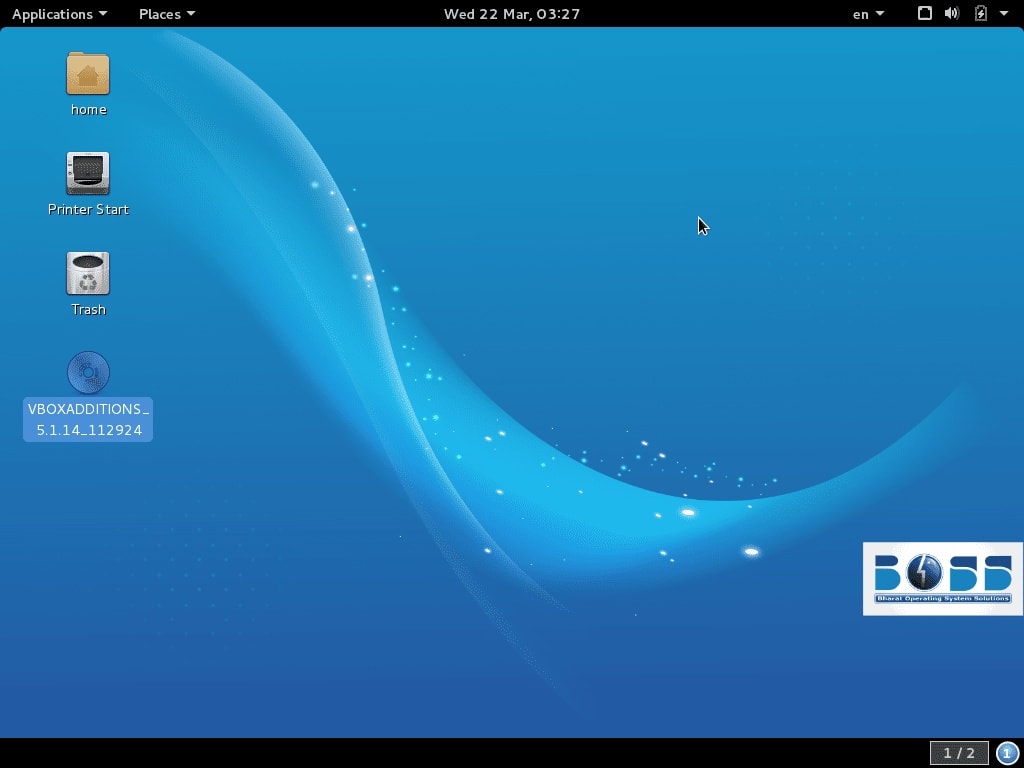
BOSS is a solid, no-surprises Debian derivative. Its strength lies in its localization and its institutional backing. Its weakness is that it can feel like a repackaged Debian with language packs — which, in a sense, it is. But for the target audience (government offices, schools, rural computing centres), that is exactly what is needed.
Hamara Linux: Community-Driven and Debian-Based
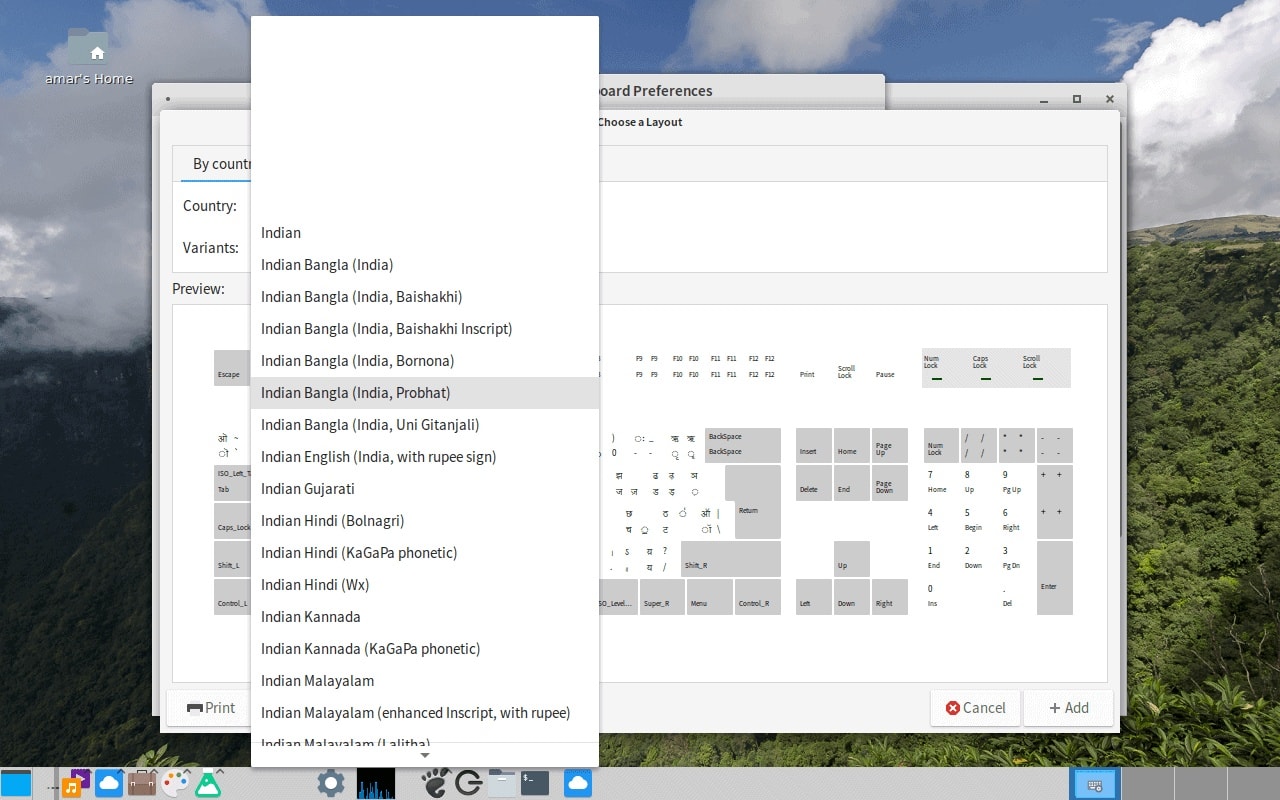
Hamara Linux is where I spent the most time during my 2017 testing. It is a community-driven, Debian-based distribution with a focus on Indian language support and accessibility. Unlike BOSS, which carries the weight of institutional backing, Hamara feels more like a passion project — and that is both its strength and its challenge. I tested Hamara in VirtualBox in November 2017. The desktop was clean and functional, with Indian language support available from the first boot.
What stood out:
- Indian language support was well-integrated, not bolted on as an afterthought.
- Package selection was thoughtful — a curated set of applications rather than the kitchen-sink approach.
- Community engagement was active, with the team responsive on forums and mailing lists.
The challenge, as with many community distributions, is sustainability. Development pace depends on volunteer energy, and releases can be inconsistent. But the vision behind Hamara — a truly Indian, community-owned Linux — is compelling.
AryaLinux: The Arch/LFS Alternative
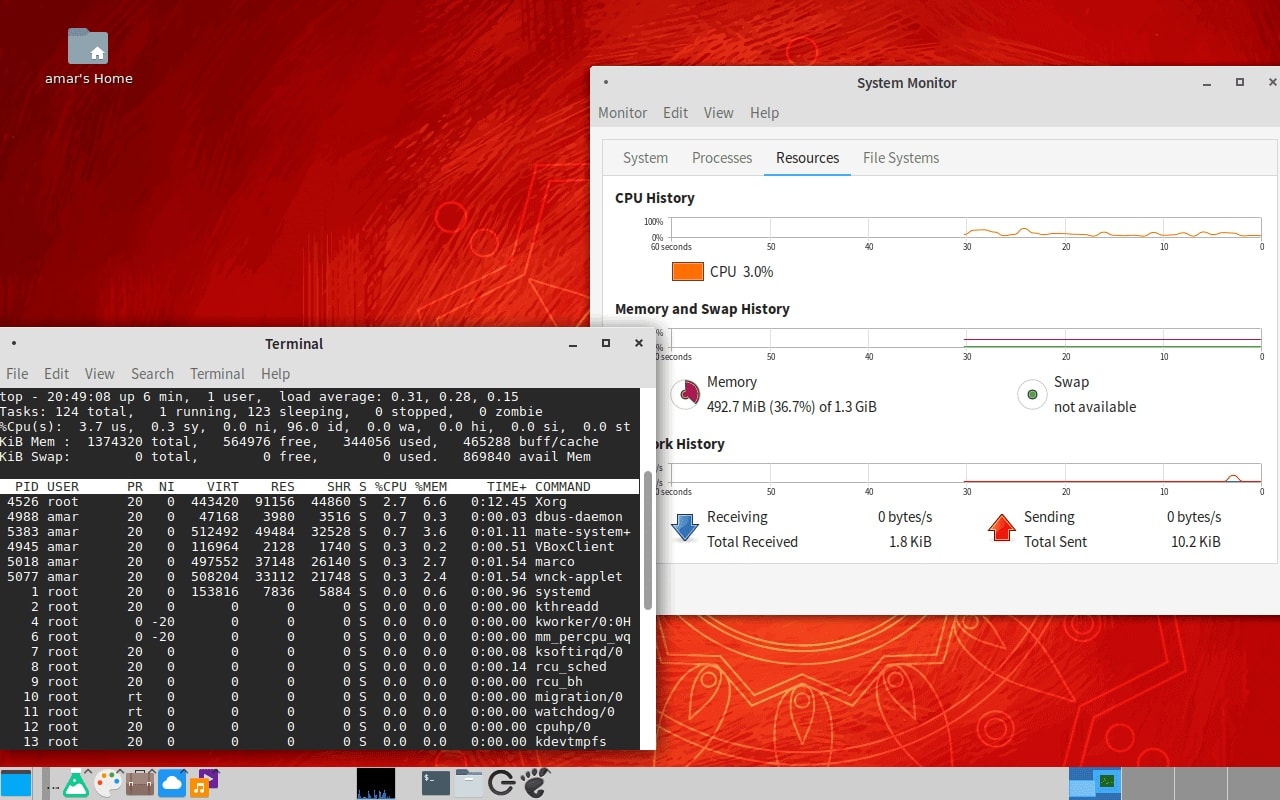
AryaLinux takes a fundamentally different approach from BOSS and Hamara. Instead of building on Debian or Ubuntu, it is based on Arch Linux and LFS (Linux From Scratch). This makes it the most technically ambitious of the three.I tested AryaLinux in 2017 as well. The experience was distinctly different from the Debian-based distributions:
- Build system. AryaLinux used a custom build system that compiled packages from source, giving users fine-grained control over what was installed.
- Minimalism. The base install was lean — no pre-installed office suite, no bundled media players. You build what you need.
- Learning curve. This is not a distribution for beginners. It assumes familiarity with the command line, package compilation, and system configuration.
AryaLinux is was a fascinating experiment. It asks the question: can an India-origin distribution be built from the ground up, rather than repackaged from an existing base? The answer, at least in 2017, was "yes, but it is hard work." The project's ambition is commendable, even if its audience is necessarily narrow.
Reflection: Does Country of Origin Matter?
This brings us to a question worth asking: does a "country of origin" label make sense for a Linux distribution?
The Linux kernel is developed by a global community. Firefox, LibreOffice, GNOME, KDE — the applications that define the desktop experience are written by contributors from dozens of countries. Even the base distributions (Debian, Ubuntu, Arch) are international projects.
So what does it mean for a distribution to be "from India"?
Arguments for:
- Localization. Indian distributions prioritize Indian language support in ways that global distributions do not always address adequately. This is a genuine, practical value-add.
- Institutional adoption. A government-backed distribution like BOSS can drive adoption in schools and government offices where trust in a "foreign" product may be lower.
- Community building. Local distributions can nurture a local open source community, creating contributors who might otherwise remain passive users.
- Cultural relevance. Default themes, wallpapers, and application choices can reflect local preferences — a small but meaningful touch.
Arguments against:
- The code is global. The kernel, the desktop environment, the applications — none of these are Indian. A distribution is, at its core, a packaging and curation effort.
- Quality is what matters. Users care about whether their system works, not where it was assembled. A poorly maintained "Indian" distribution is worse than a well-maintained "global" one.
- Fragmentation. Creating yet another Ubuntu derivative does not necessarily advance the Linux ecosystem. The effort might be better spent contributing upstream to existing projects.
- The label can mislead. An "Indian" distribution that is simply Ubuntu with a different wallpaper and language packs may create an illusion of indigenous innovation that does not reflect reality.
My view, after testing these distributions in 2017, is that country of origin can matter — but only when the distribution adds genuine value beyond repackaging. Hamara's community engagement and AryaLinux's build-from-source approach are examples of that. A thin reskin of Ubuntu, however well-intentioned, is harder to justify.
Other Distributions of note:
- OpenLX: Early KDE-based Hindi-friendly distribution.
- Swecha: Community-driven distro focused on Telugu users.
Challenges Faced by Indian Distros
Indian Linux distributions have struggled due to lack of sustained funding and contributors, government policy shifts and vendor lock-ins, high dependency on upstream projects like Ubuntu/Debian, and low awareness and community engagement.
Conclusion and Key Takeaways
- DistroWatch lists a small number of active Linux distributions originating from India
- Many Indian distributions are based on Ubuntu or Debian due to localization support, ease of forking, and hardware compatibility
- BOSS Linux is government-backed (C-DAC) and Debian-based, focused on institutional adoption
- Hamara Linux is community-driven, Debian-based, and prioritizes Indian language integration
- AryaLinux is based on Arch/LFS, offering a minimalist, build-from-source approach
- Country of origin can matter when a distribution adds genuine value beyond repackaging
The Indian Linux distribution landscape is small but interesting. BOSS Linux serves an institutional role. Hamara Linux represents community passion. AryaLinux pushes technical boundaries. Each takes a different approach, and each has something to teach the broader Linux ecosystem. The question of whether "country of origin" matters in open source does not have a simple answer. But the question itself is worth asking — and the distributions that survive will be the ones that can answer it with more than just a flag and a wallpaper.
Frequently Asked Questions
These reflections lead to broader questions about the role of local distributions in a global open-source ecosystem.
1. How many Linux distributions originate from India?
A search on DistroWatch filtered by origin "India" and status "Active" returns a handful of distributions. The most notable are BOSS Linux, Hamara Linux, and AryaLinux.
2. Why are so many Indian Linux distributions based on Ubuntu?
Ubuntu and Debian provide mature localization frameworks, excellent hardware compatibility, large community support, and tools that make forking straightforward. For distributions targeting Indian languages, this is a significant advantage.
3. What is BOSS Linux?
BOSS (Bharat Operating System Solutions) is a Debian-based Linux distribution developed by C-DAC, a government R&D organization in Chennai. It supports 18+ Indian languages and is designed for government and educational use.
4. What is Hamara Linux?
Hamara Linux is a community-driven, Debian-based distribution focused on Indian language support and accessibility. It is maintained by the Hamara Foundation.
5. Does country of origin matter for open source software?
It can — particularly for localization, institutional adoption, and community building. But the underlying code (kernel, applications, desktop environments) is developed globally. Country of origin matters most when the distribution adds value beyond repackaging.
References
- DistroWatch — India-origin distributions — https://distrowatch.com/search.php?origin=India
- BOSS Linux — https://bosslinux.in
Have you used any Indian Linux distro? Share your experience. 3. C-DAC — https://cdac.in 4. Hamara Linux 5. AryaLinux 6. Ubuntu Customization Guide — https://help.ubuntu.com/community/InstallCDCustomization 7. Arch Linux — https://archlinux.org 8. Linux From Scratch — https://linuxfromscratch.org