
Nearly six years have passed since Red Hat’s December 2020 announcement that CentOS 8 would reach its end-of-life (EOL) on December 31, 2021. The decision sent shockwaves through the open-source community, leaving sysadmins, web hosts, and Linux enthusiasts scrambling for alternatives. Four years after the EOL, where do we stand?
This post revisits the disruption, adaptation, and evolution of the CentOS ecosystem. It also provides a 2026 update on the state of AlmaLinux, Rocky Linux, and other alternatives that emerged in the wake of CentOS 8’s demise.
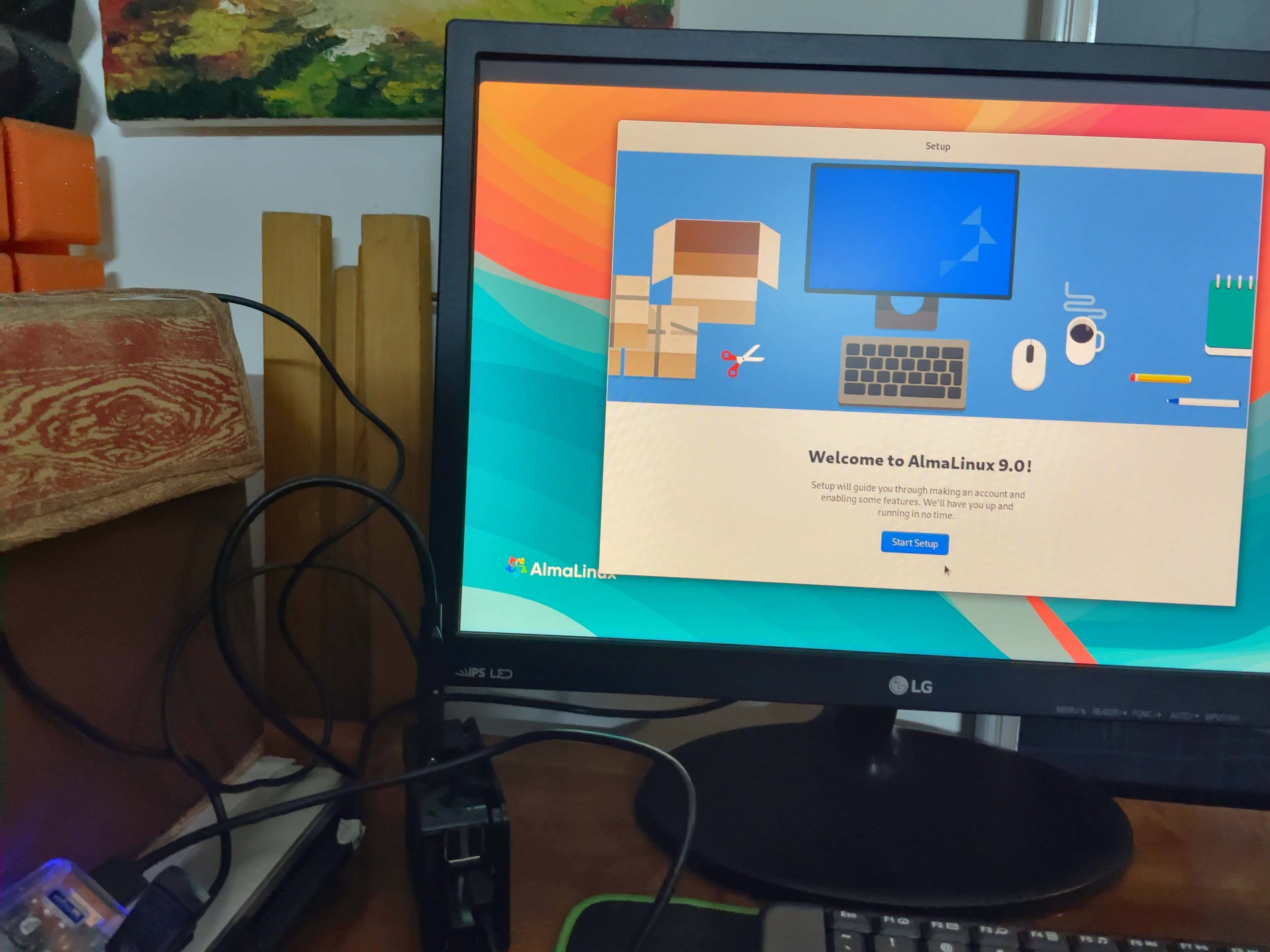 Alma Linux on Raspberry Pi4, Oct 2022
Background: The CentOS 8 EOL and Its Impact
In December 2020, Red Hat (now part of IBM) announced that CentOS 8 would no longer receive updates after December 31, 2021. Instead, the project would shift focus to CentOS Stream, a rolling-release distribution positioned as an upstream for RHEL. This move left many users—who relied on CentOS as a stable, downstream alternative to RHEL—without a clear migration path.
The community’s reaction was swift and vocal. Concerns ranged from fragmentation to corporate control over open-source projects. Yet, as often happens in open source, adversity bred opportunity. Several projects stepped up to fill the void, with AlmaLinux and Rocky Linux emerging as the most prominent successors.
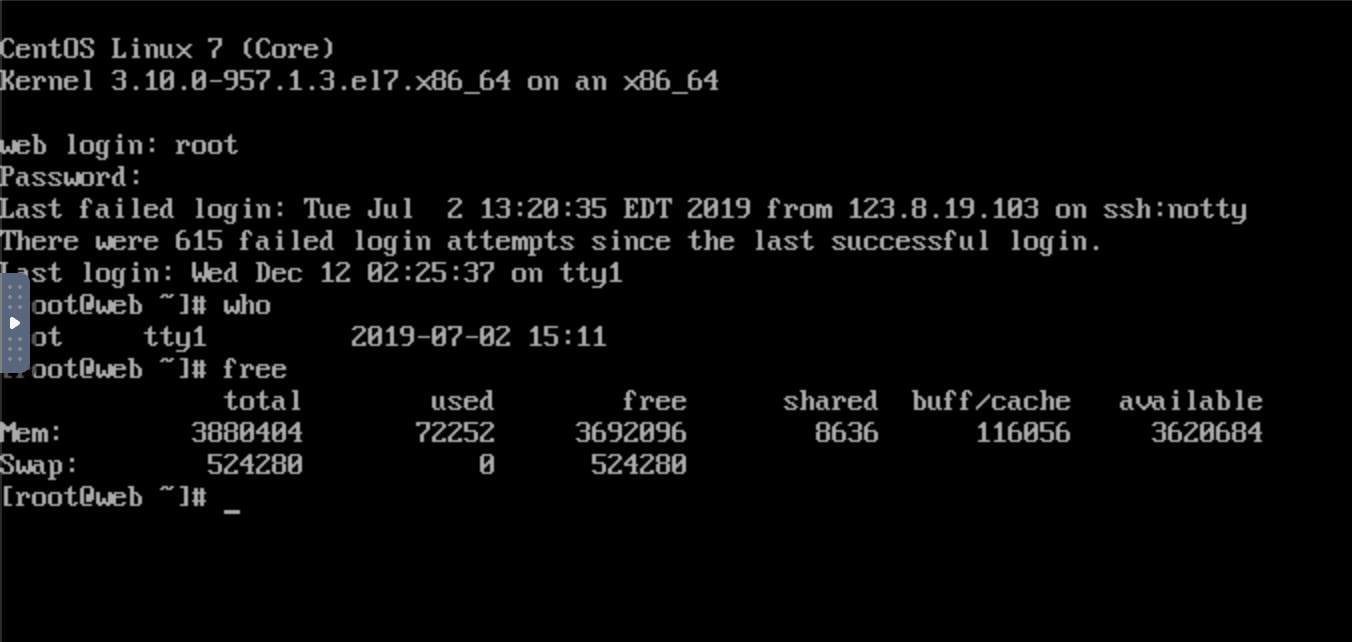
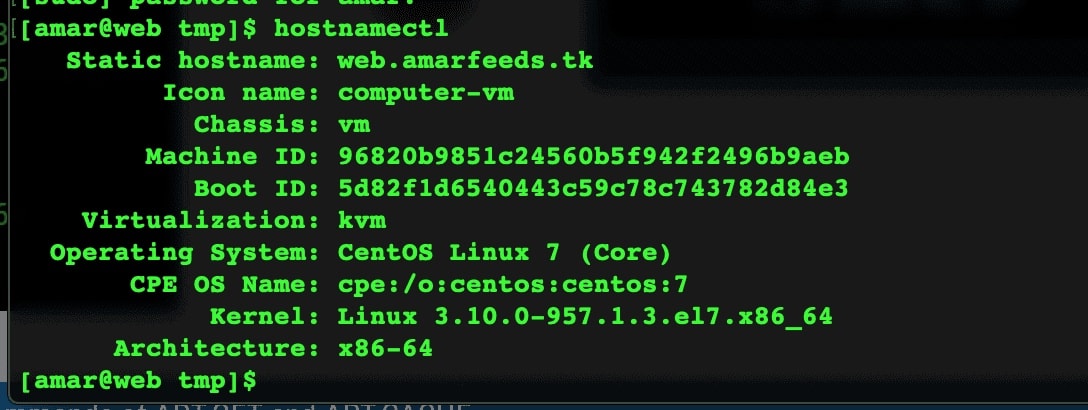 Image of Centos, July 2019
The Rise of AlmaLinux and Rocky Linux
AlmaLinux
AlmaLinux vs. Rocky Linux Comparison
AlmaLinux was one of the first major alternatives to gain traction. Backed by Cloud Linux Inc. and later structured under a nonprofit foundation, AlmaLinux positioned itself as a 1:1 binary-compatible alternative to RHEL. By 2026:
- Stability: Multiple stable releases (9.x series) have proven reliable in production environments.
- Governance: A clear corporate-backed nonprofit model ensures transparency and community involvement.
- Adoption: Widely adopted by web hosts and sysadmins, with robust migration tools and documentation.
Website: AlmaLinux
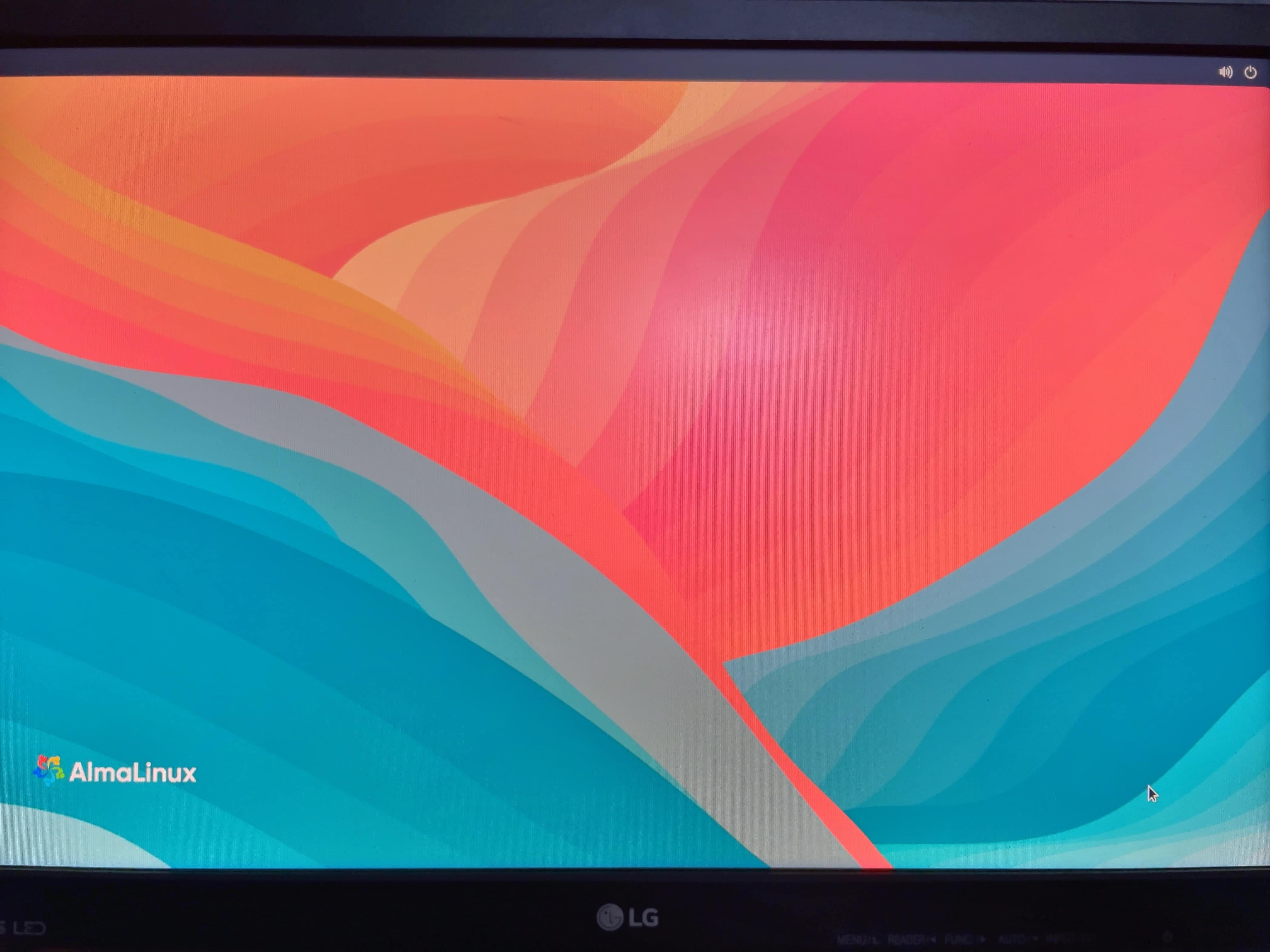 Desktop version for Alma Linux. October2022
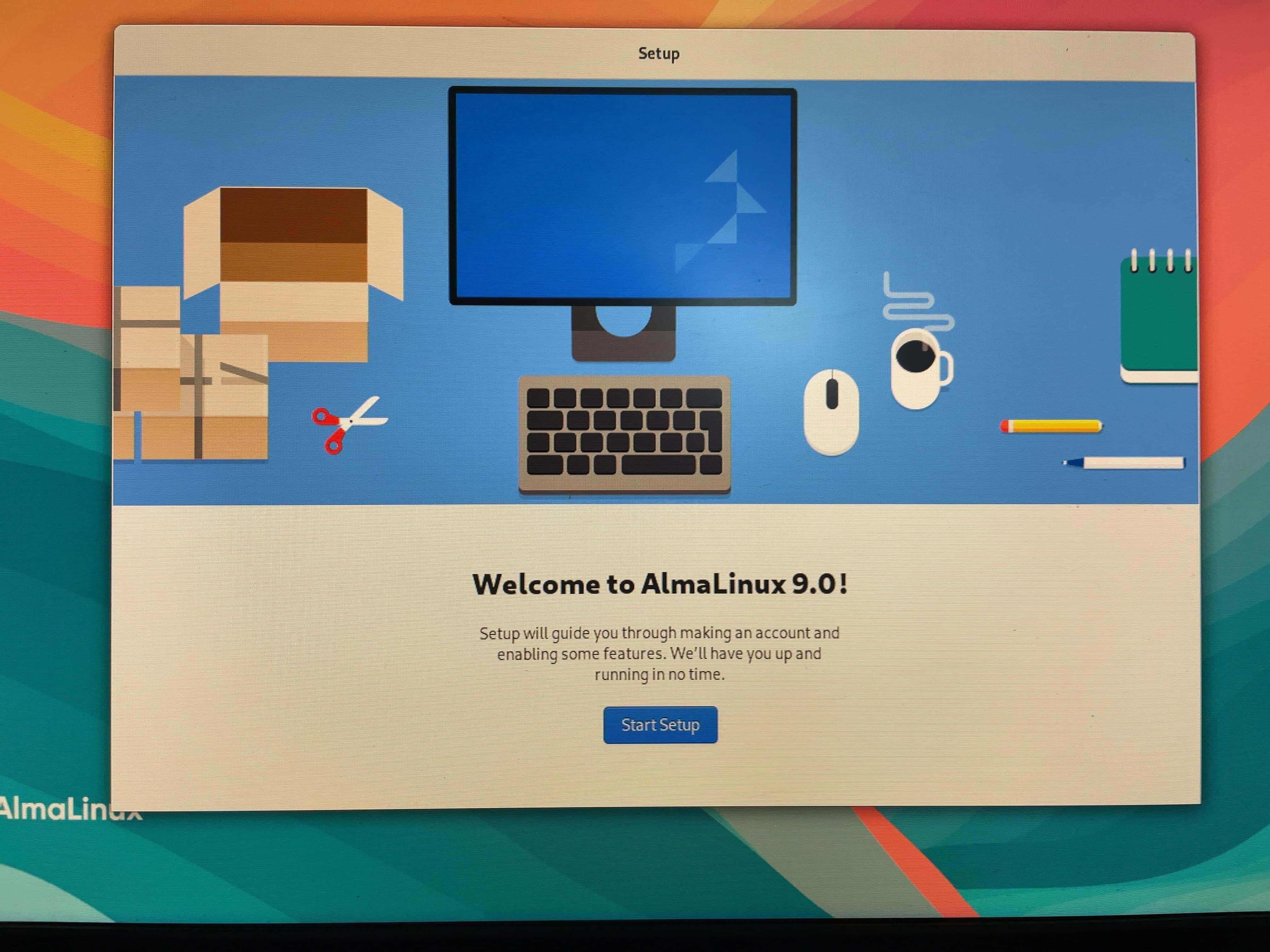 Raspberry Pi4 with Alma Linux. October2022
Rocky Linux
Rocky Linux, founded by Gregory Kurtzer (original co-founder of CentOS), quickly became AlmaLinux’s primary rival. Operated as a 501(c)(6) nonprofit, Rocky Linux emphasized community-driven development and grassroots momentum. By 2026:
- Stability: On par with AlmaLinux, with a focus on long-term support and reliability.
- Credibility: Kurtzer’s involvement lent the project instant legitimacy among CentOS loyalists.
- Adoption: Equally popular among former CentOS users, with strong enterprise and cloud support.
Website: Rocky Linux
Note: The "fork wars" of 2021–2022 have long since settled into peaceful coexistence, with both projects thriving in their respective niches.
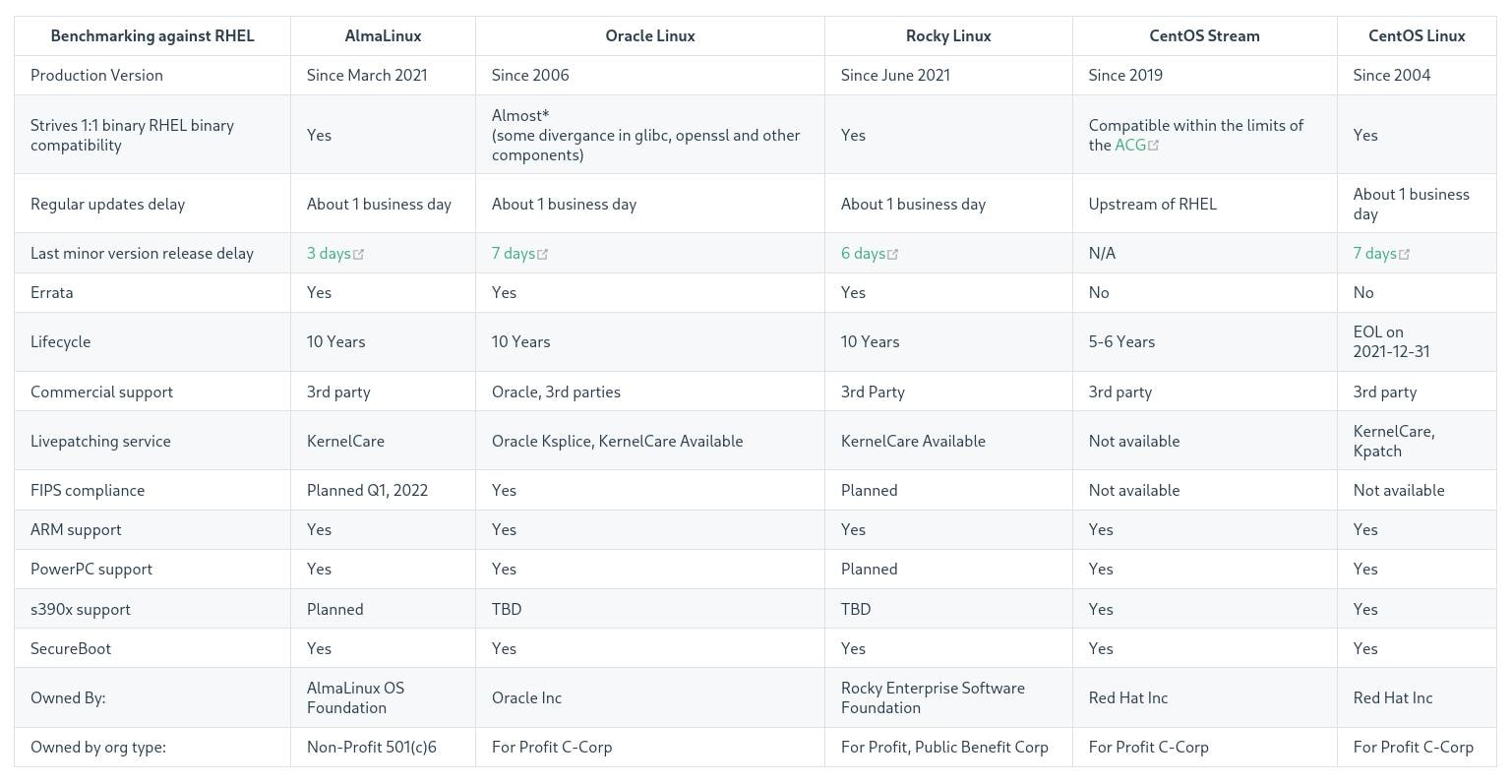 Compariosn of features of Alma Linux and Rocky Linux
Other Alternatives in 2026
Ubuntu Server and Debian
For users willing to switch ecosystems, Ubuntu Server LTS (22.04, 24.04) and Debian Stable (12) emerged as safe, non-RHEL alternatives. These distributions offered:
- Ease of use: Familiar package management (
aptvs.yum/dnf). - Community support: Extensive documentation and user bases.
- Flexibility: Ideal for those not tied to RPM-based workflows.
Websites:
CentOS Stream
CentOS Stream, Red Hat’s intended replacement, occupies a niche role as a rolling preview of future RHEL releases. While it has stabilized since its early days, adoption for production servers remains limited. Most users prefer the stability of AlmaLinux or Rocky Linux over Stream’s rolling nature.
Website: CentOS Stream
Oracle Linux
Oracle Linux remains a viable option for organizations already invested in Oracle Cloud Infrastructure (OCI). Despite its technical quality, perception issues (e.g., Oracle’s reputation for aggressive licensing) have limited its broader adoption.
Website: Oracle Linux
Niche Players
- Microsoft’s CBL-Mariner: Primarily used for Azure cloud infrastructure and edge services. While technically impressive, it never gained mainstream traction outside Microsoft’s ecosystem.
- Liberty Linux (SUSE): Failed to gain significant market share despite SUSE’s efforts.
- VZLinux, Springdale Linux: Remain curiosity-level deployments with minimal adoption.
What Didn’t Work
| Alternative | Why It Struggled | Current Status (2026) |
|---|---|---|
| CentOS Stream | Misaligned with production needs | Niche use, limited adoption |
| Liberty Linux | Too late to market | Minimal traction |
| Oracle Linux | Perception issues (licensing, control) | Niche, OCI-focused |
2026 Recommendations
Choosing the right alternative depends on your needs:
For RHEL-Compatible Systems
- AlmaLinux: Best for users who prefer corporate-backed stability.
- Rocky Linux: Ideal for those who value community-driven development and founder credibility.
For Ecosystem Flexibility
- Ubuntu Server 24.04 LTS: A solid choice for Debian-based workflows.
- Debian 12: The go-to for stability and minimalism.
For Legacy Systems
- CentOS 7: Still supported until June 2024 (extendable with LTS programs). Migrate to AlmaLinux/Rocky Linux when ready.
For Enterprise Needs
- Paid RHEL: If budget allows, Red Hat’s official support is unmatched.
- Oracle Linux: Consider if already integrated with Oracle Cloud.
 Timeline for CentOs and its forks
The Legacy of CentOS 8
The CentOS 8 EOL was a watershed moment in Linux infrastructure history. It exposed the fragility of corporate-controlled open-source projects and forced the community to confront questions of sustainability and resilience. The resulting ecosystem—while fragmented—is arguably more robust than before 2020.
Key Takeaways
- Choice won: The open-source community now has multiple viable alternatives to CentOS.
- Resilience: The rapid rise of AlmaLinux and Rocky Linux demonstrated the community’s ability to adapt and innovate.
- Lessons learned: The saga highlighted the need for diverse governance models (nonprofit, corporate-backed, community-driven).

Conclusion
The CentOS 8 EOL was a disruptive storm, but the open-source community weathered it with ingenuity and collaboration. Today, AlmaLinux and Rocky Linux stand as the primary successors, while Ubuntu Server and Debian offer compelling alternatives for those willing to switch ecosystems. The legacy of CentOS lives on—not in a single distribution, but in a diverse, resilient ecosystem that continues to thrive. In open source, choice usually wins. But with choice comes responsibility—whether it’s selecting the right distribution, supporting sustainable projects, or contributing to the community.
 datacenter server rack with centos8