I purchased a new laptop, a Lenovo Thinkpad, in early January 2022, after much deliberation. It turned out to be a Ryzen Powered Lenovo Thinkpad E14. Read my first impressions and review of this Linux on Thinkpad. The AMD Ryzen R5 5600U is a rather snappy processor, and so far I am happy with it so far.
In a way, this brings things back to a full circle: My first laptop back in 2001 was also a Thinkpad.
Many years after my first IBM ThinkPad, I found myself returning to the ThinkPad family once again. This time, it was a refurbished Lenovo ThinkPad that I purchased through Amazon. It arrived with Windows 10, but I had no intention of keeping it that way. Linux was always going to be its permanent home.
The machine came with a Samsung 500 GB NVMe SSD. Although it supported a secondary drive, I simply partitioned the original drive and began experimenting. Manjaro Linux was the first distribution I installed, followed by EndeavourOS. Like many Linux enthusiasts, I spent a fair amount of time exploring the Arch ecosystem.
Eventually, however, I found myself returning to familiar territory. Most of the laptop’s life was spent running Linux Mint Debian Edition and regular Linux Mint. After years of experimentation, I had come to appreciate stability and predictability over novelty.
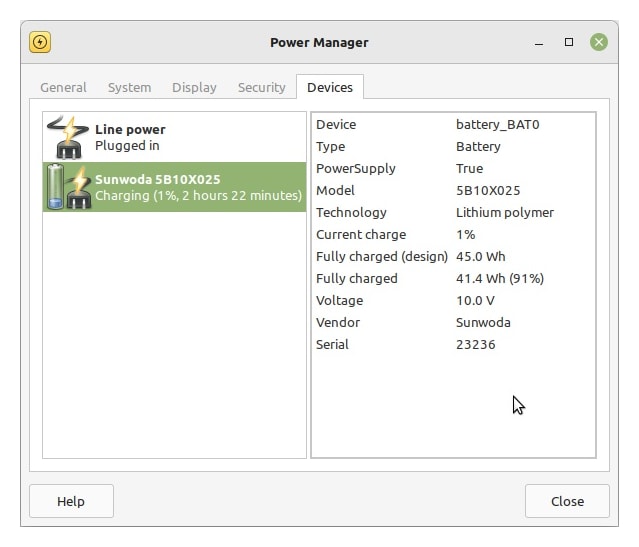
The one persistent disappointment was battery life. Despite tweaking settings and using TLP, the popular power management utility for Linux laptops, I was never entirely satisfied with the endurance I got from the machine. Everything else about the ThinkPad was excellent, but battery life remained its Achilles’ heel.
For a long time, I used to tell myself that this ThinkPad would be the last laptop I would ever buy. With hindsight, I think I need to qualify that statement. Perhaps it was simply the last Windows laptop I would buy. Or perhaps the last x86 laptop. If I eventually decide to purchase another machine, I suspect it will either be an ARM-based laptop or perhaps a MacBook Air. The 13-inch version feels slightly too small for my tastes, so the 15-inch model would probably be my preference.
Of course, that too is a story for another day.
Under the Hood: Lenovo Thinkpad E14 Ryzen Laptop
Under the great laptop switcharoo, I have replaced the operating system on this laptop with Windows 11, and my wife uses it now.
In March 2025, my wife and I effectively swapped laptops. I moved to a Dell Latitude 5300, while she inherited the ThinkPad. As of today, both of us are perfectly happy with our respective machines.
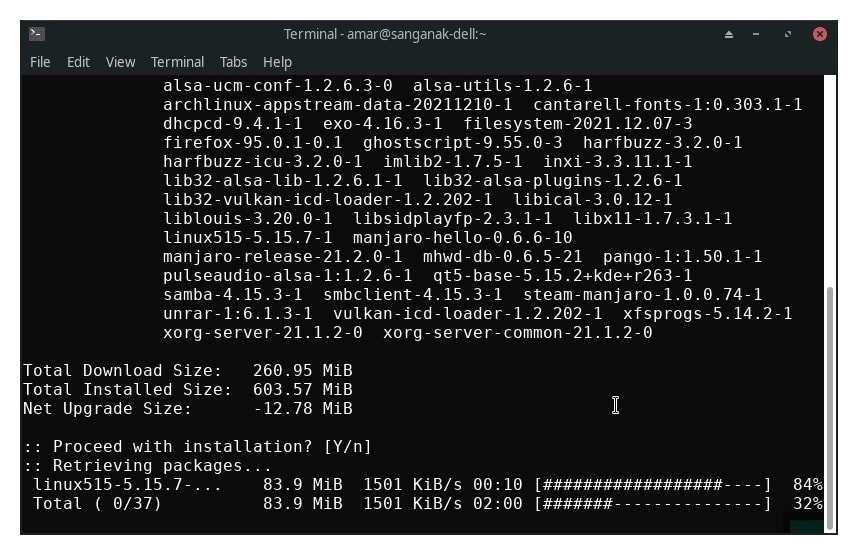
I purchased this machine from Amazon. It machine came pre-installed with Windows 11, and I disliked it right away. I partitioned the 512 odd GB NVMe drive into three partitions of almost equal size, and installed Manjaro Linux on one of the partitions. This is my first ever AMD Ryzen powered laptop, and my first experience using Linux on a new Thinkpad. I have not experienced major issues except for the file manager for KDE desktop (Dolphin) which consumes a lot of RAM and crashes often. That would be the browser issue and not necessarily operating system issue.
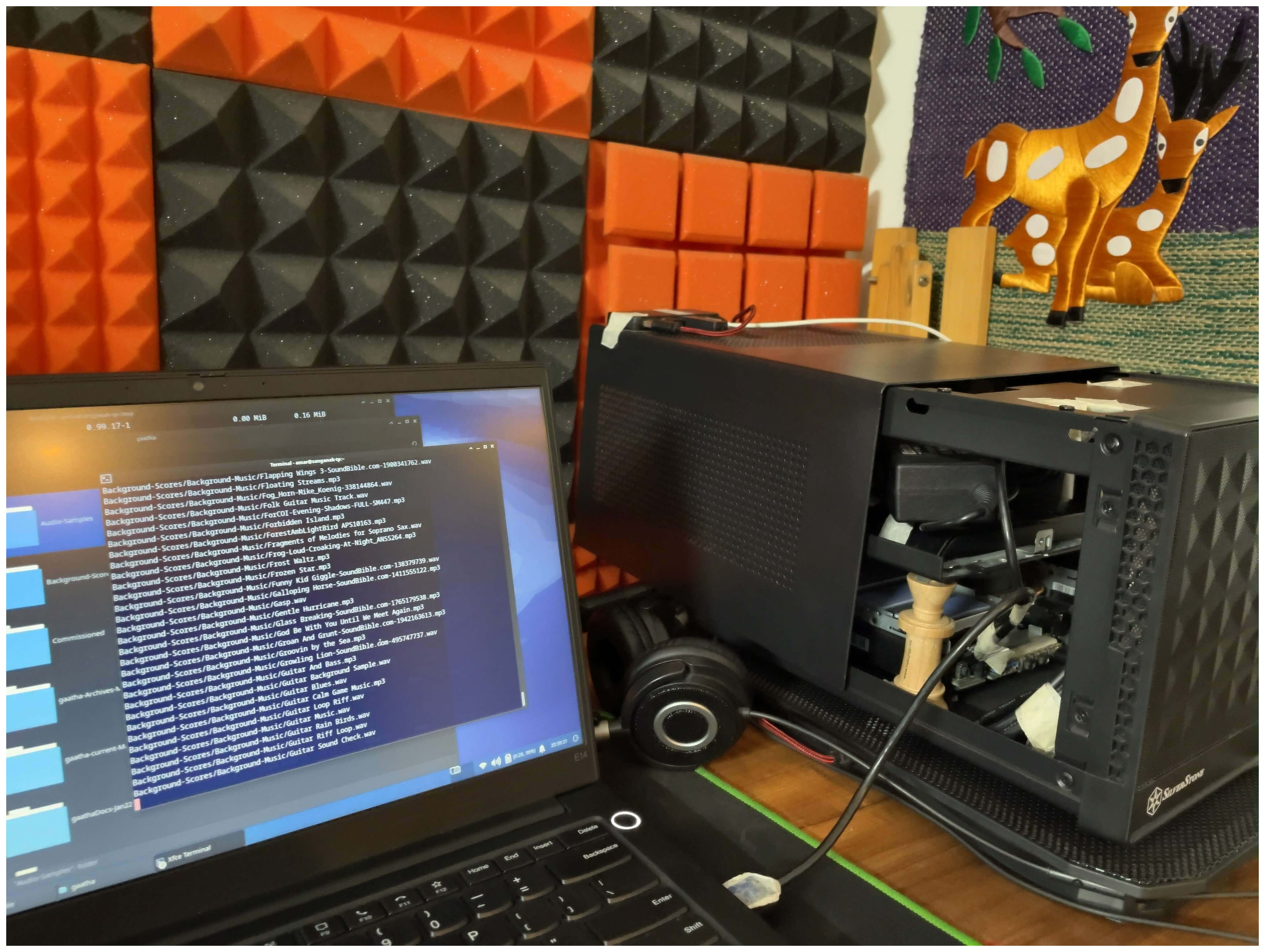
Hardware Upgrades
Like any self-respecting ThinkPad owner, I could not resist tinkering with the hardware. The machine originally came with 8 GB of RAM, with one module soldered onto the motherboard. I eventually added a 16 GB DDR4 stick, bringing the total memory to 24 GB. The two modules operated at different speeds—the onboard memory ran at 2400 MHz, while the newer stick was rated for 3200 MHz. Naturally, both settled at the lower speed, but that hardly mattered in day-to-day use. More importantly, the additional memory meant I could comfortably run multiple browsers, virtual machines and, of course, several Linux experiments simultaneously.
Storage was another temptation I could not resist. Although I initially used only the original Samsung 500 GB NVMe drive, the ThinkPad had an empty secondary NVMe slot waiting to be populated. Eventually, I added another drive, increasing the total storage capacity to around 1.5 TB. By any reasonable standard, it was excessive for our needs, but one of the joys of owning a ThinkPad is the ability to upgrade and customise the machine long after many manufacturers have moved on to sealed, non-upgradable designs.
I replaced Manjaro Linux with “Atlantis” version of Endeavour OS, which is relatively more stable. I had the occasional memory leaks with Firefox, but adding 1 GB of Swap seems to have resolved the issue for now. I plan to up the RAM on this system to 24 GB from existing 8 GB, and add a 500 GB NVMe disk. Both pieces of hardware will be pulled out of the “Kitchen Sink” desktop. This upgrade will change some of the below results. This post will be updated with a more detailed review at that time.

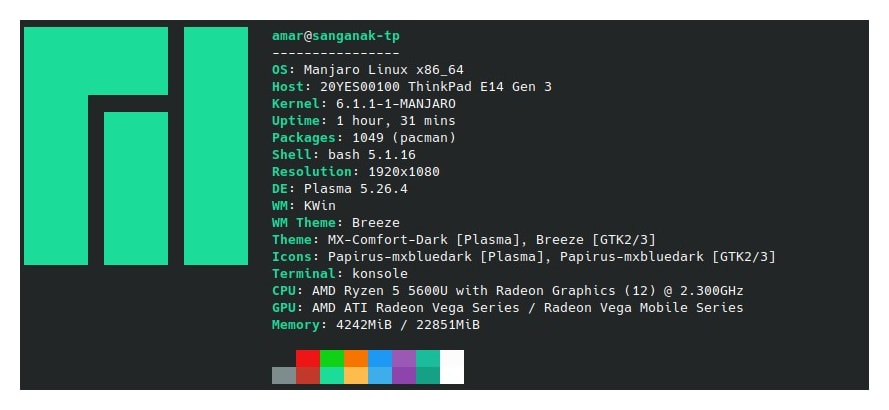
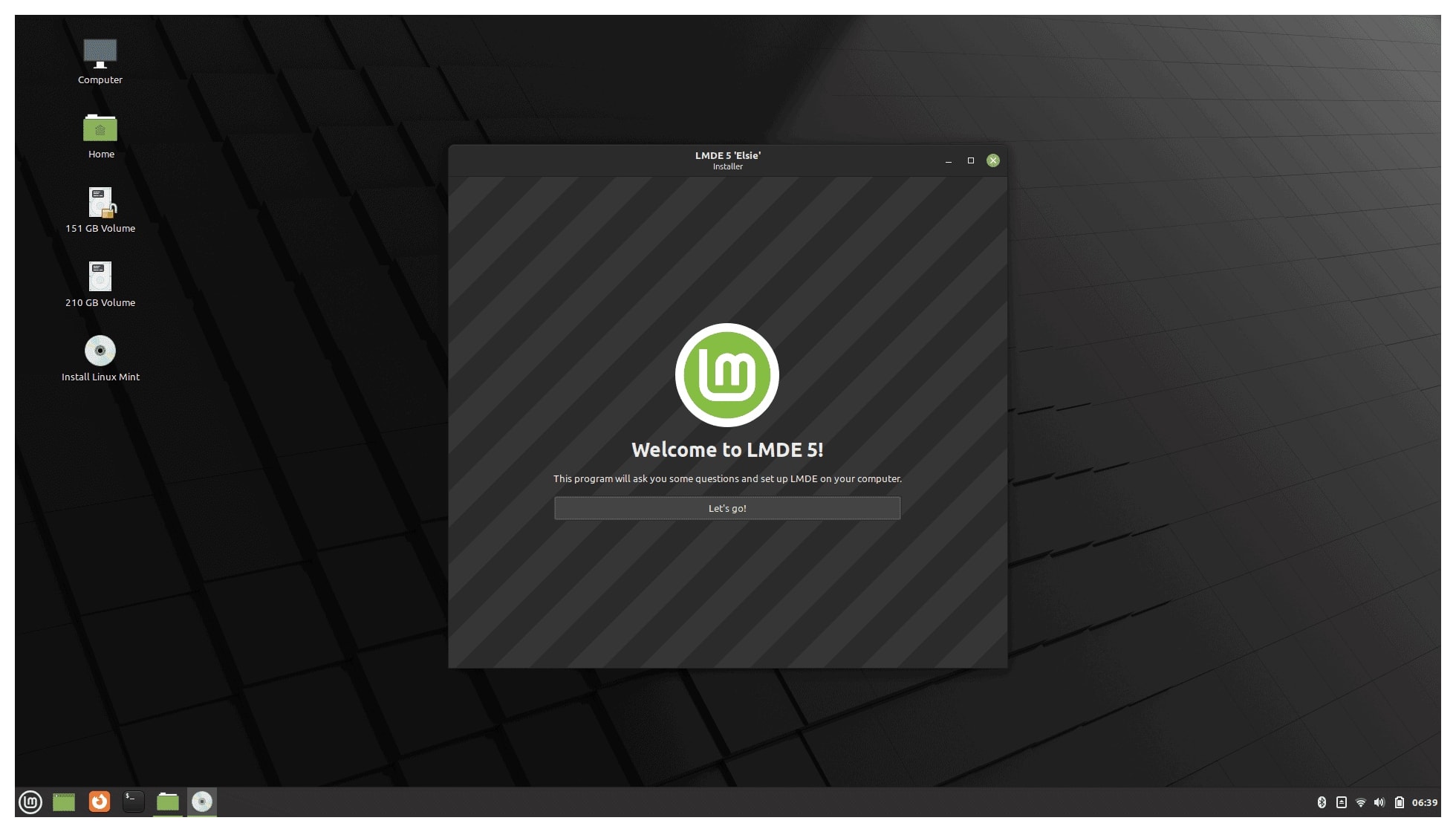
Battery Usage
On Linux I kept getting heating and battery issues, andcpu fan would run almost constantly.Of course I had over 20 tabs open in browser.
Takeaways
Before handing the laptop over to my wife, I scaled the memory configuration back to 16 GB, which was more than sufficient for her use case. The generous 1.5 TB of storage, however, remained. To this day, I suspect she uses only a fraction of it, but perhaps that is part of the fun. Sometimes the upgrades are not entirely about necessity. They are simply expressions of affection for a machine that has served us well.
Every time I see my wife using that ThinkPad, it brings back memories.
Perhaps that explains why ThinkPads inspire such loyalty. They are not merely appliances. They invite you to open them up, upgrade them, experiment with them and, over time, make them uniquely yours. In an age of increasingly sealed devices, there is something deeply satisfying about that.